
 Image 1 of 2
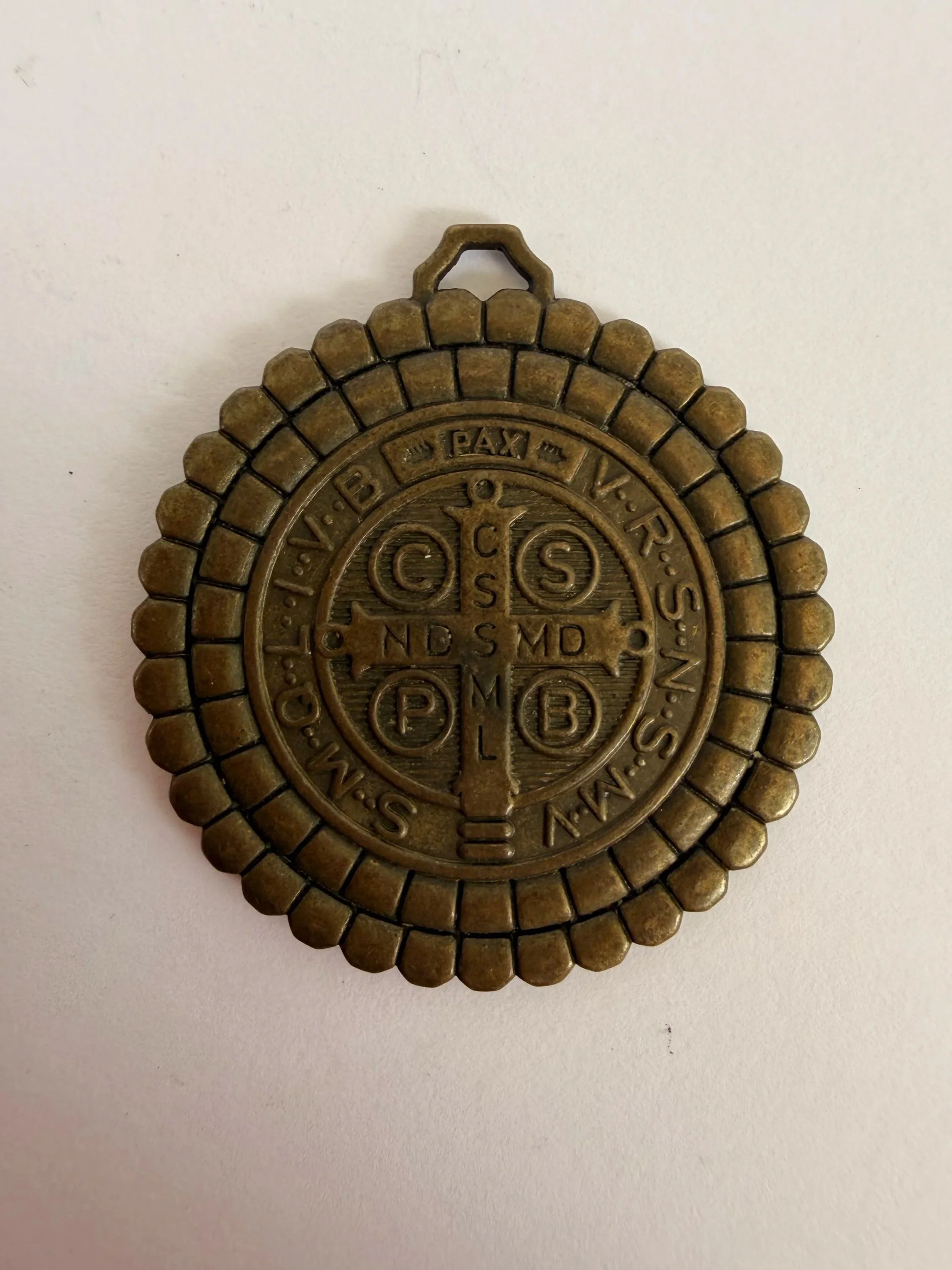 Image 2 of 2
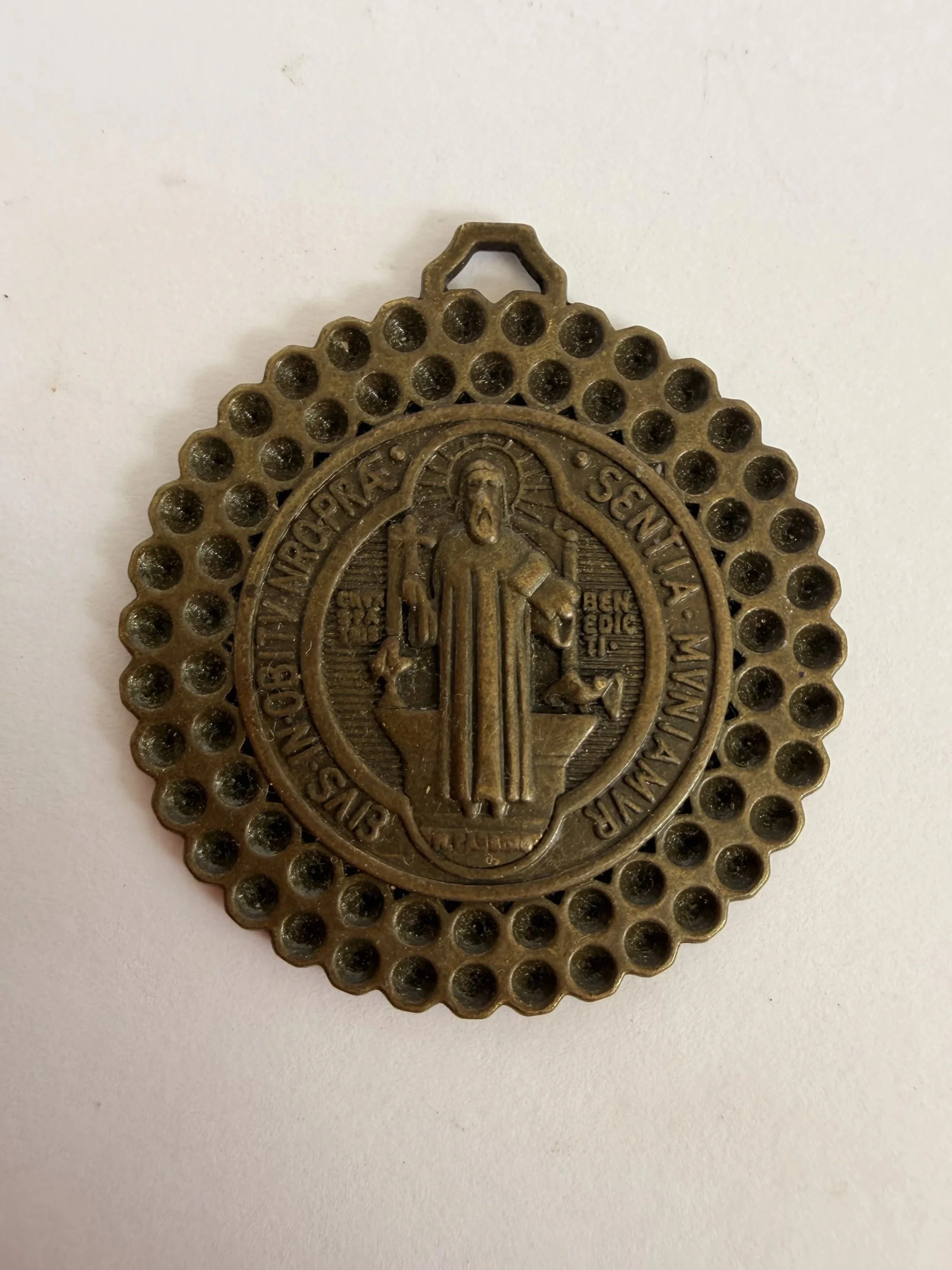
This antique Saint Benedict Medal features a beautifully detailed openwork border surrounding one of the most revered sacramental medals in the Catholic tradition. Cast in a warm bronze-toned metal, the pendant combines the timeless symbolism of the Saint Benedict Medal with an elegant beaded frame, creating a devotional piece that is both spiritually significant and visually distinctive.
The obverse depicts Saint Benedict of Nursia holding the Rule of his order and a processional cross, encircled by the Latin inscription “Eius in obitu nostro praesentia muniamur” (“May we be strengthened by his presence at the hour of our death.”). The reverse displays the famous Saint Benedict Cross, featuring the traditional initials representing prayers of protection and the word PAX (“Peace”) at the top, a hallmark of Benedictine spirituality.
Acquired in Valencia, Spain, this substantial medal was likely intended to be worn as a devotional pendant or displayed as a cherished symbol of faith and spiritual protection. Its rich patina and crisp casting make it an excellent addition to any collection of antique Catholic devotional artifacts.
Specifications
Title: Antique Saint Benedict Medal Pendant with Decorative Openwork Border
Origin: Acquired in Valencia, Spain
Material: Cast bronze or brass alloy with naturally aged patina
Dimensions: 1⅝ inches in diameter
Weight: 0.52 ounces
Condition: Very good antique condition with an even aged patina, light surface wear, and well-preserved relief. The integral suspension loop remains intact and ready for display or wear.
Estimated Age
Early to mid-20th century (circa 1920–1950).
While Saint Benedict medals have been produced for centuries, the clean, well-defined casting, integrated suspension loop, and decorative openwork border suggest a production date in the first half of the 20th century.
Disclaimer: This description has been prepared using careful visual examination and historical research to provide the most accurate information possible. Age, origin, materials, and attribution are educated assessments and have not been authenticated or certified by a professional appraiser, museum, or recognized authentication authority.
This antique Saint Benedict Medal features a beautifully detailed openwork border surrounding one of the most revered sacramental medals in the Catholic tradition. Cast in a warm bronze-toned metal, the pendant combines the timeless symbolism of the Saint Benedict Medal with an elegant beaded frame, creating a devotional piece that is both spiritually significant and visually distinctive.
The obverse depicts Saint Benedict of Nursia holding the Rule of his order and a processional cross, encircled by the Latin inscription “Eius in obitu nostro praesentia muniamur” (“May we be strengthened by his presence at the hour of our death.”). The reverse displays the famous Saint Benedict Cross, featuring the traditional initials representing prayers of protection and the word PAX (“Peace”) at the top, a hallmark of Benedictine spirituality.
Acquired in Valencia, Spain, this substantial medal was likely intended to be worn as a devotional pendant or displayed as a cherished symbol of faith and spiritual protection. Its rich patina and crisp casting make it an excellent addition to any collection of antique Catholic devotional artifacts.
Specifications
Title: Antique Saint Benedict Medal Pendant with Decorative Openwork Border
Origin: Acquired in Valencia, Spain
Material: Cast bronze or brass alloy with naturally aged patina
Dimensions: 1⅝ inches in diameter
Weight: 0.52 ounces
Condition: Very good antique condition with an even aged patina, light surface wear, and well-preserved relief. The integral suspension loop remains intact and ready for display or wear.
Estimated Age
Early to mid-20th century (circa 1920–1950).
While Saint Benedict medals have been produced for centuries, the clean, well-defined casting, integrated suspension loop, and decorative openwork border suggest a production date in the first half of the 20th century.
Disclaimer: This description has been prepared using careful visual examination and historical research to provide the most accurate information possible. Age, origin, materials, and attribution are educated assessments and have not been authenticated or certified by a professional appraiser, museum, or recognized authentication authority.